

Plantar fasciitis exercises
Plantar fasciitis causes pain under the heel. It is often worst with the first steps in the morning or after sitting for a while.
Stretching the plantar fascia on the sole of the foot can be uncomfortable at first. Mild to moderate discomfort during the exercises is fine. Taking painkillers beforehand can help if you need them.
You can do the exercises in order, or fit one or two in at convenient times through the day. Keep doing them for 2 to 3 months to give yourself the best chance of a good recovery. Most people get better, but it can take several months.
The exercises
Exercise 1: heel tissue massage
Cross your legs so the sore foot rests on your other knee.
Pull your toes back to tighten the tissue on the sole of your foot.
Press firmly into the sole and massage up and down for 10 seconds.
Do this 10 times in total.
Do 2 to 3 sets of 10 every day. Good times are just before you get out of bed and after sitting for a long time.
Before your first steps in the morning, also do the stretch on its own: pull your toes back until you feel the arch tighten, hold for 10 seconds and repeat 10 times.
Exercise 2: frozen can or ball roll
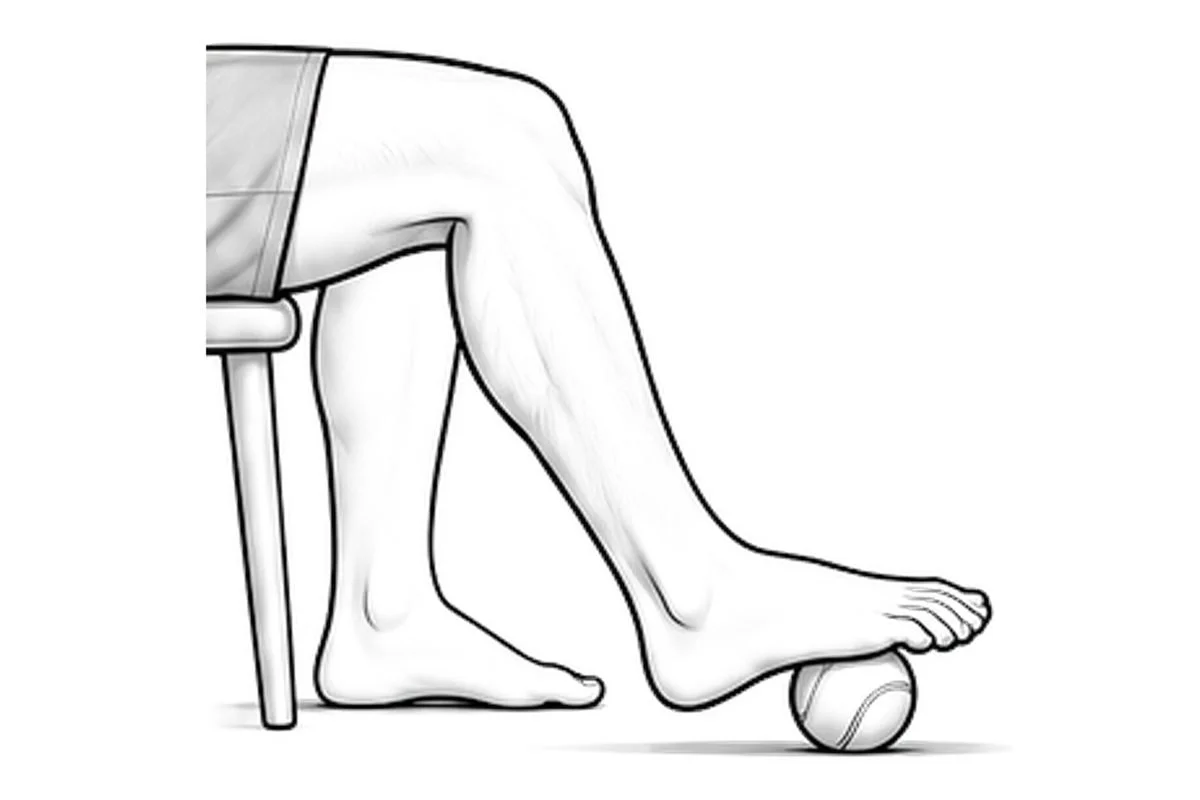
Put a frozen can or a ball under your foot. A golf ball works well but can be uncomfortable, so start with a tennis or squash ball.
Roll it back and forth under your foot for 2 minutes.
This works well before you get up in the morning or after sitting for a long time, but you can do it at any time of day.
Exercise 3: band or towel stretch
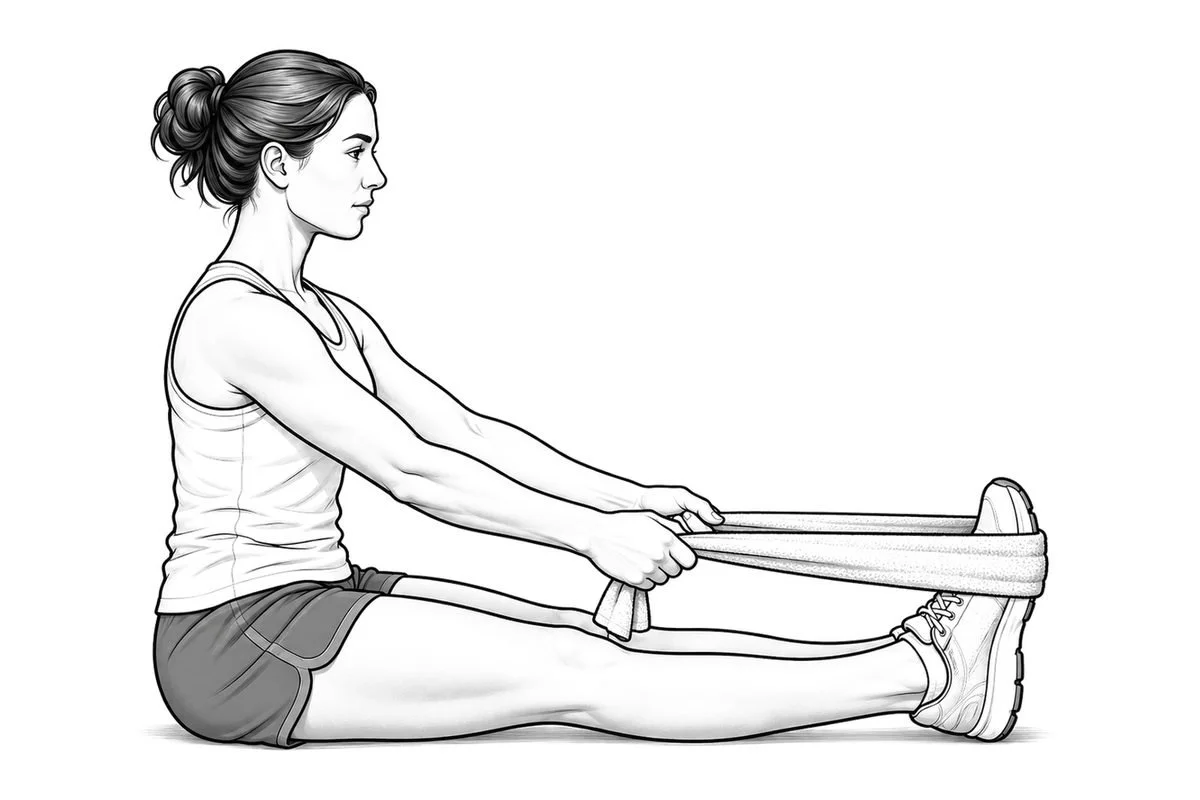
Sit on the floor with your legs straight out in front of you.
Loop a towel, rope or band around the ball of your foot and pull it towards you to stretch the back of your calf.
Hold for 30 seconds. Repeat 3 times.
Exercise 4: standing calf stretch
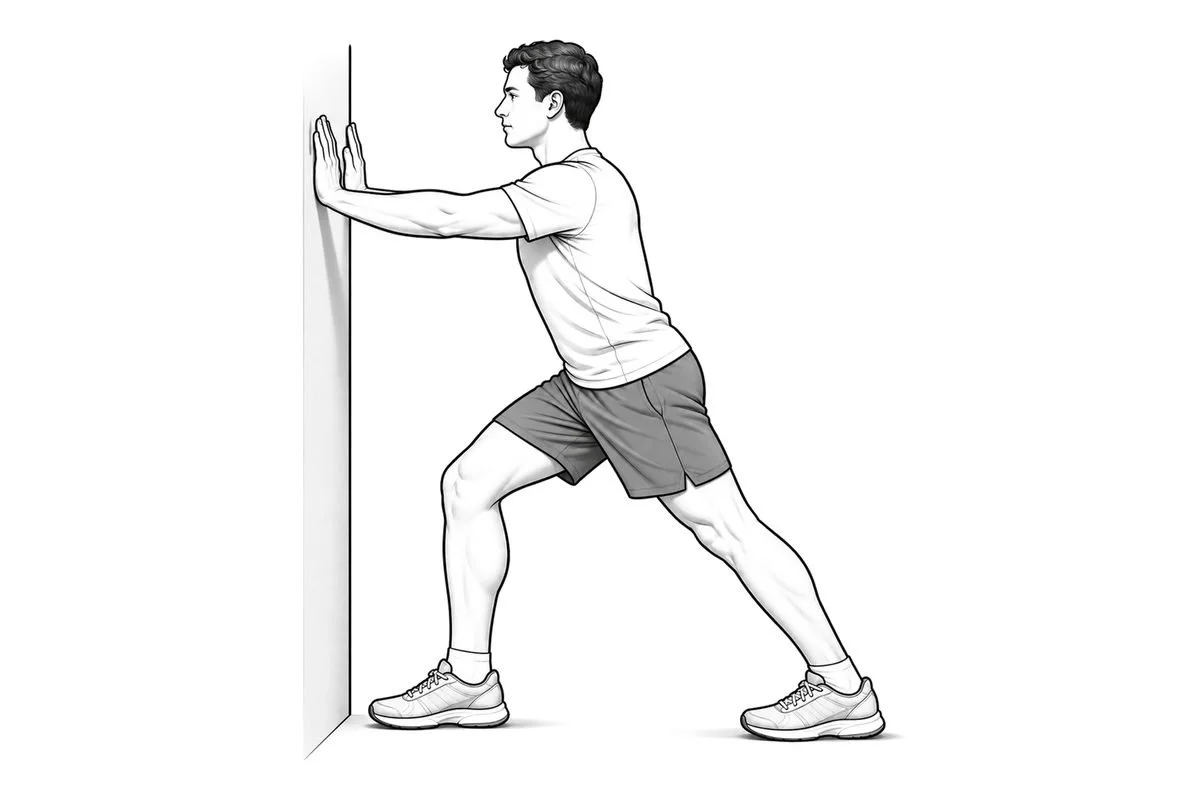
Face a wall and put your hands on it at about eye level. Keep your sore foot back and your good foot forward, with the heel of your sore foot flat on the floor.
Turn your sore foot slightly inwards (as if you were pigeon-toed) and slowly lean into the wall until you feel a stretch in the back of your calf.
Hold for 30 seconds. Repeat 3 times.
Exercise 5: standing soleus stretch
Stand facing the wall with your hands on it and your sore foot back.
Bend your knees a little and gently lean them towards the wall to stretch the lower calf.
Keep your heel on the ground.
Hold for 30 seconds. Repeat 3 times.
Exercise 6: step stretch
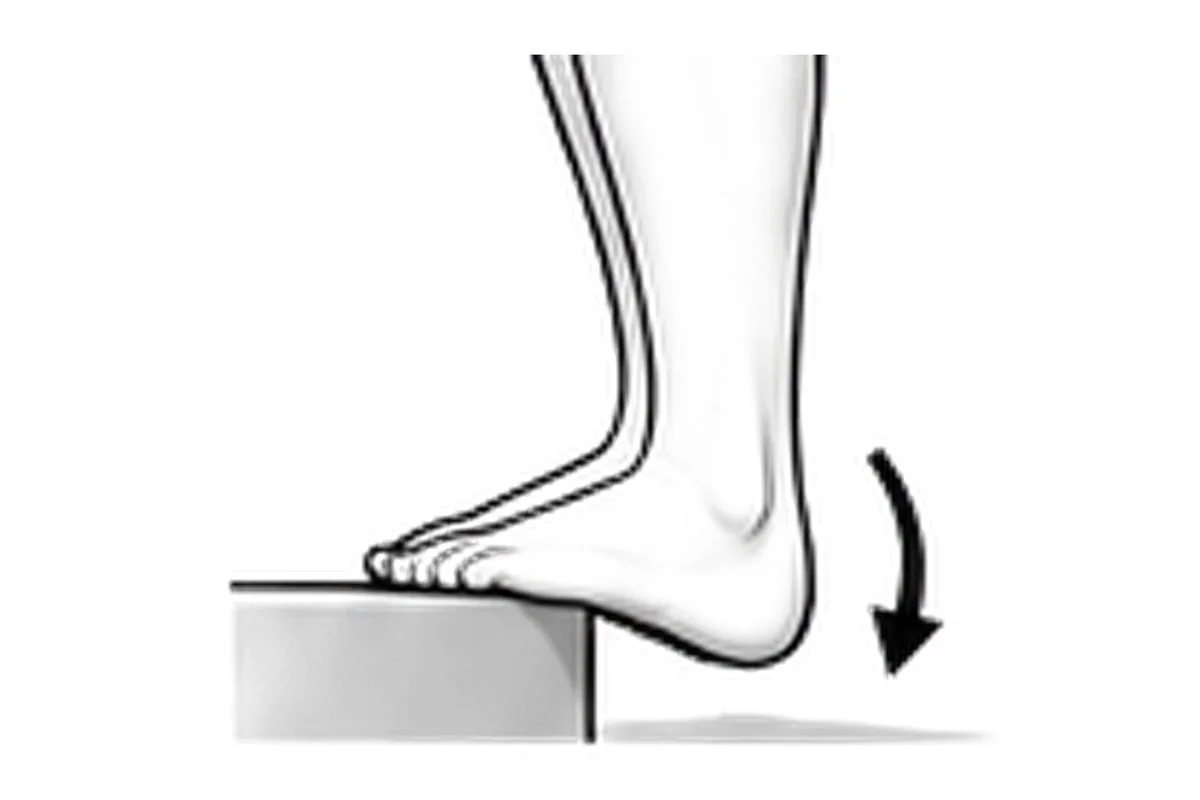
Stand with the ball of your sore foot on a step.
Lower your heel towards the step below until you feel a stretch in the arch of your foot.
Hold for 30 seconds, then relax. Repeat 3 times.
Exercise 7: sitting toe lift
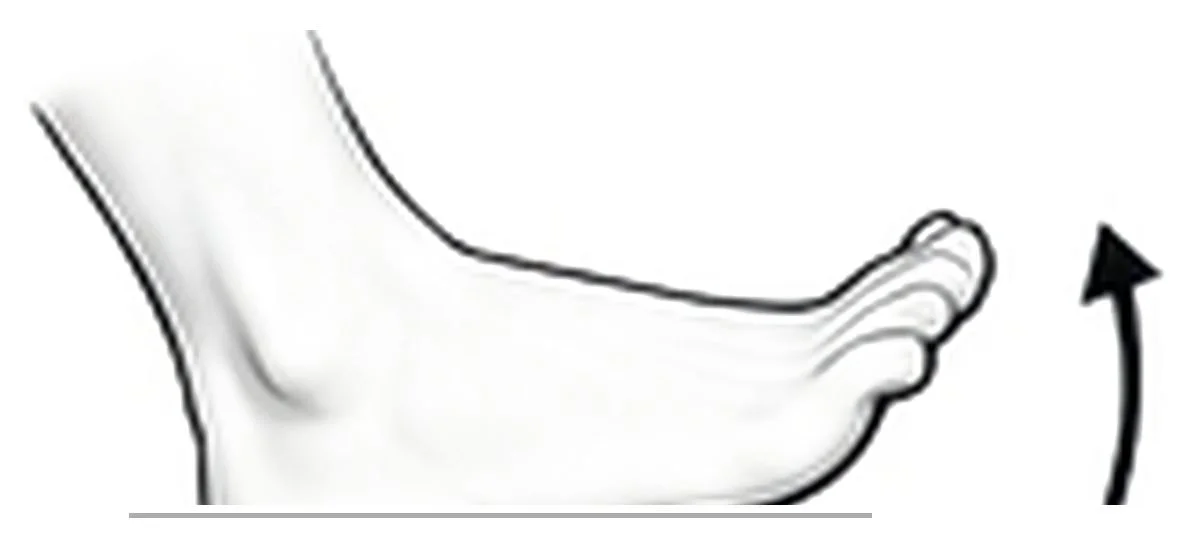
Sit in a chair with your feet flat on the floor.
Lift the toes and ball of your sore foot off the floor, keeping your heel down.
Hold for 5 seconds. Repeat 10 times. Do 3 sets of 10.
Exercise 8: heel raise with a towel under the toes
Stand on your sore foot on a step, with a rolled-up towel under your toes and your heel over the edge. Hold onto something for balance.
Rise up onto your toes over 3 seconds, hold for 2 seconds, then lower over 3 seconds.
Do 3 sets of 12, every second day.
As it gets easier, wear a backpack with books in it to add weight.
Other things that help
Wear supportive shoes with a cushioned heel, and avoid walking barefoot on hard floors.
Cut back on running and long periods of standing for a while, and build back up gradually.
Heel cups or shoe inserts help some people when used alongside the exercises.
If the first steps in the morning are your worst pain, a night splint worn for 1 to 3 months can help. It holds your foot gently pulled up while you sleep.
Taping the arch can ease the pain for the first few weeks. A physiotherapist can show you how.
If you are carrying extra weight, losing some takes load off the heel.
If you are not improving
If you are not improving after 3 months, there are other treatments, such as shockwave therapy, that Mr Senthi can discuss with you.
When to see a doctor
See a doctor if:
you have numbness, tingling or burning in the foot
the pain wakes you at night or is there all the time, even at rest
the heel is red, hot or swollen
the pain started after a fall or injury.
This is general information and does not replace an assessment of your own condition. If you are not sure whether these exercises suit you, check with Mr Senthi or your physiotherapist.
Last reviewed by Mr Suren Senthi, November 2026.